

Make Summer the Smart Season for Your New Water Heater
Planning a new water heater installation in the middle of winter on the South Shore can be stressful. Cold showers, snow on the ground, and tight schedules are not the best mix. Summer gives you a calmer window to upgrade, with more time to plan, compare options, and get the work done without rushing.
By handling your water heater installation in the warmer months, you can reduce the chance of a surprise breakdown when temperatures drop and storms roll through. You also get more control over timing, less disruption to your daily routine, and some breathing room to pick the right type of system. We will walk through why summer is such a good time, how to choose the right heater for a South Shore home, what kind of planning and budgeting to think about, and what to expect on installation day and after.
Why Summer Is Prime Time for Water Heater Installation
On the South Shore, winter means heavy heating use, frozen ground, and shorter days. Summer is simply easier for this kind of project. Schedules are more flexible, and you are less likely to deal with a no-hot-water emergency while the wind howls outside.
A summer water heater installation often brings:
- Easier scheduling and quicker response
- Less impact on your everyday routines
- Better access to basements and venting points
- Time to test and fine-tune before winter hits
During summer, many plumbing companies receive fewer emergency heat and hot water calls than they do in the cold season. That means you can usually pick dates and time frames that fit around your work, travel, and family plans instead of taking the first opening you can get.
Life at home is also lighter in summer. Warm-weather showers are more forgiving if hot water is off for a few hours. Kids might be at camp or out for the day, laundry loads can be spaced out, and you are less dependent on steaming hot baths to thaw out after being outside.
The physical work is smoother too. On the South Shore, a lot of water heaters sit in basements, utility rooms, or near exterior walls. In summer there is:
- No snow or ice blocking bulkhead doors or walkways
- More daylight for safe access around the house
- No freezing air blowing through open doors while equipment moves in and out
Once the new heater is in place, you have weeks or months to see how it performs. You can adjust the temperature, learn how fast it recovers after back-to-back showers, and spot any small issues long before Nor’easters and freezing temps arrive.
Choosing the Right Water Heater for South Shore Homes
Picking a water heater is not just about grabbing whatever is in stock. South Shore homes come in many styles, from older Capes and Colonials to split-levels and newer builds. Each one has its own hot water needs and layout quirks.
Start by looking at how your household uses hot water:
- How many full bathrooms and half baths do you have?
- Do you often run shower, dishwasher, and laundry at the same time?
- Are you planning to add a bathroom, in-law space, or finished basement in the near future?
Next, think about system type. Common options include:
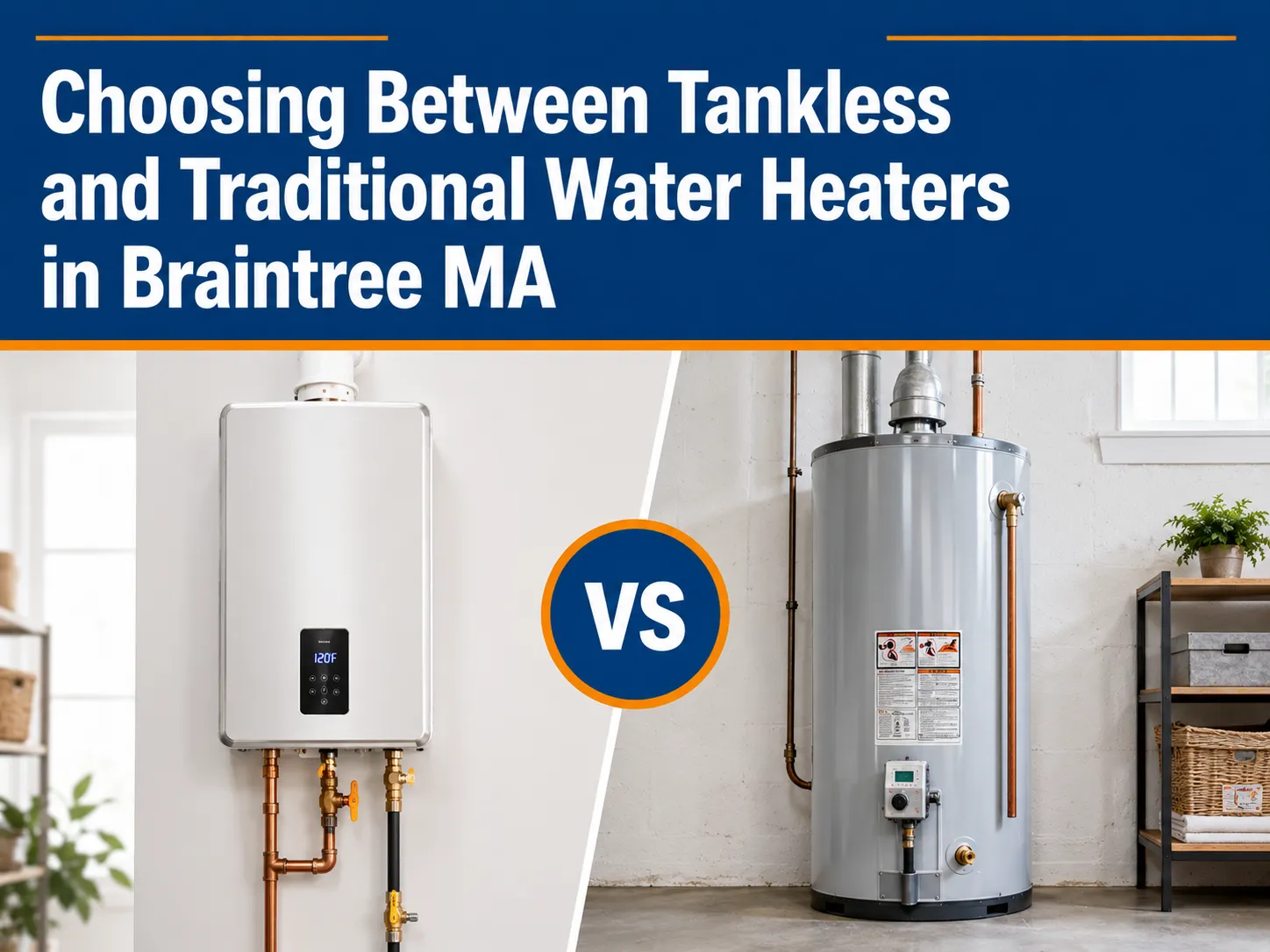
- Traditional tank water heaters, which store a set amount of hot water
- Tankless (on-demand) units, which heat water as it flows through
- Gas, if you already have gas service and venting options
- Electric or hybrid heat pump units, which can work well in certain basements and utility areas
Traditional tanks are familiar, and many South Shore basements already have space and venting set up for them. Tankless units can be a strong choice when you want steady hot water for longer showers or you want to free up some floor space, as long as gas or electric capacity and venting are suitable.
Local factors matter more than people think. Groundwater in this region can run cool, which affects how quickly water heats up and how much capacity you need. Older New England plumbing and tighter mechanical rooms might limit where a unit can go, what size fits, and how venting has to be routed through walls or out a chimney.
Energy efficiency also plays a big role. A more efficient unit can help lower monthly utility bills over time. Certain models may qualify for energy rebates or manufacturer incentives, especially when they meet specific efficiency standards. It is worth asking a professional which options make sense for your style of home and your long-term plans.
Timeline and Budget Tips for a Smooth Summer Project
A summer water heater installation goes best when you start planning before the weather gets hot. You do not need to rush, but you do want enough lead time to ask questions and avoid any last-minute surprises.
A smart planning window gives you time to:
- Gather one or more professional opinions
- Decide on tank vs tankless and gas vs electric styles
- Address any needed updates to venting or connections
- Get the work done before back-to-school and fall routines kick in
Several things influence the overall cost of the project. These often include:
- Size and type of unit that fits your home and hot water needs
- Gas line or electrical updates if the new unit has different requirements
- Venting changes if you switch from one style to another
- Code-related safety items like expansion tanks or specific valves
- Removal and disposal of your old water heater
When building a realistic budget, remember you are paying for more than the unit itself. There can be permit fees, inspection steps required by your town, and sometimes minor changes to piping or connections to bring things up to current code. It also helps to think about long-term operating costs, not just the upfront purchase, since a more efficient heater can make a difference over years of daily use.
In South Shore towns, including Braintree, inspection offices review mechanical work to be sure it meets current standards. Permits and inspections are not something you want to rush in the middle of a cold snap. Handling them during the summer offers more time for processing, re-inspections if needed, and any small adjustments before the cold season puts your system under heavy load.
What to Expect on Installation Day and After
Knowing what will happen on installation day reduces stress. You can plan around the work and keep your household running smoothly while the old heater comes out and the new one goes in.
Before the installer arrives, it helps to:
- Clear a path to the basement or utility space
- Move stored items away from the water heater area
- Secure pets in another room so doors can stay open safely
- Know where your main water and gas shutoffs are located
A typical installation day usually follows a clear set of steps. The old unit is turned off, drained, and disconnected. It is then removed from the space. The new water heater is brought in, set in place, and connected to water lines, gas or electric service, and venting. After that, the system is filled, purged of air, and test-fired to check for proper operation and leaks. Many homeowners can expect hot water again later the same day, though timing can vary based on the type of system and any extra work needed.
Safety and code compliance sit at the center of this process. A licensed and insured professional will:
- Install proper venting that matches the heater type
- Set up pressure relief valves and discharge piping correctly
- Add or check expansion tanks if required by local code
- Confirm proper clearances around the heater and gas or electric connections
Once the job is done, there are a few simple follow-up steps. It is wise to confirm the temperature setting, learn how to shut things off in an emergency, and register any product warranties. Checking the area for small leaks over the next few days and having the tank flushed on a regular schedule can help your new water heater last longer and run more smoothly.
Take the Heat Off Next Winter by Planning Your Install Now
Planning a water heater installation in summer removes a lot of pressure from the cold months. You get more choice over timing, less disruption around busy winter routines, and a system that has already been tested before it faces heavy use.
A good first step is to look at the age and behavior of your current heater. Many homeowners notice warning signs like rusty-looking water, rumbling sounds from the tank, water on the floor nearby, or hot water that runs out faster than it used to. Instead of waiting until it fails on a freezing morning, using the summer to upgrade lets you stay ahead of the problem.
At Route 3 Plumbing and Heating in Braintree, we work with South Shore homeowners on residential plumbing and heating projects of this kind, with a focus on clean, careful work that respects your home. Our local experience with town codes and inspection processes helps your project move along as smoothly as possible so your hot water is ready when winter returns.
Frequently Asked Questions
Why is summer a good time to plan water heater installation in South Shore homes?
Summer gives homeowners a calmer window to replace an aging water heater before cold weather returns. Scheduling is often easier, basement access is less affected by snow or ice, and the new system can be tested and adjusted well before winter demand increases.
What should homeowners consider before choosing a new water heater?
Homeowners should consider household size, number of bathrooms, daily hot water use, available basement or utility room space, gas or electric capacity, venting options, and whether they may add a bathroom, in-law space, or finished basement in the future.
Is a tankless water heater a good choice for South Shore homes?
A tankless water heater can be a good choice for homes that need steady hot water, want to save floor space, or have higher hot water demand. However, the home must have the right gas, electric, and venting setup for the unit to perform properly.
What costs should be included in a water heater installation budget?
A realistic budget should include the cost of the unit, installation labor, old water heater removal, permit or inspection requirements, venting changes, gas or electrical updates, code-related safety items, and any needed piping or connection adjustments.
What happens during a typical water heater installation?
The old water heater is shut off, drained, disconnected, and removed. The new unit is brought in, connected to the water lines, gas or electric service, and venting, then filled, tested, and checked for leaks. In many cases, hot water can be restored the same day, depending on the system and any extra work needed.
Enjoy Reliable Hot Water With Expert Local Installation
If you are ready to upgrade your home’s comfort with professional water heater installation, we are here to help every step of the way. At Route 3 Plumbing and Heating, we carefully evaluate your home’s needs so you get the right size, efficiency, and setup. Whether you are replacing an old unit or installing one in a new space, we work efficiently and cleanly to minimize disruption. For scheduling and questions, contact us today.